Hay tradiciones que no se explican, se heredan / Some traditions aren’t explained, they’re inherited
La palabra vermut muchas la conocemos desde bien pequeñas, porque cuando llegaban los domingos por la mañana nos poníamos nuestras mejores galas o la ropa de mudar, como dicen por la terreta, y salíamos con la familia a tomar el vermut. La hora del vermut solía ser después de la misa de las doce en muchas casas… aunque para muchos, lo importante no era la misa, era la excusa perfecta para salir y compartir momentos en familia o con los amigos.
A nosotras nos pedían un vaso de mosto y una gilda o cualquier otra tapa, y nos pasábamos la mañana correteando por la calle con los primos o con amigos que acabábamos de conocer allí mismo, en la puerta del bar o en la calle del tapeo. En aquella época daba igual quién fueras: en cinco minutos ya estabas jugando como si os conocierais de toda la vida.
Desde pequeñas hemos asociado la hora del vermut con uno de los momentos más divertidos del fin de semana. Además, era durante esa salida cuando caía la propina sagrada para las chuches: tico-tico, gusanitos, morenitos, Chupa Chups, Peta Zetas… y alguna bolsa que desaparecía antes incluso de llegar a casa. Y eso que tus padres ya te habían advertido de que, si comías muchas chuches, luego no te iba a entrar la comida… pero ¿quién se podía resistir?
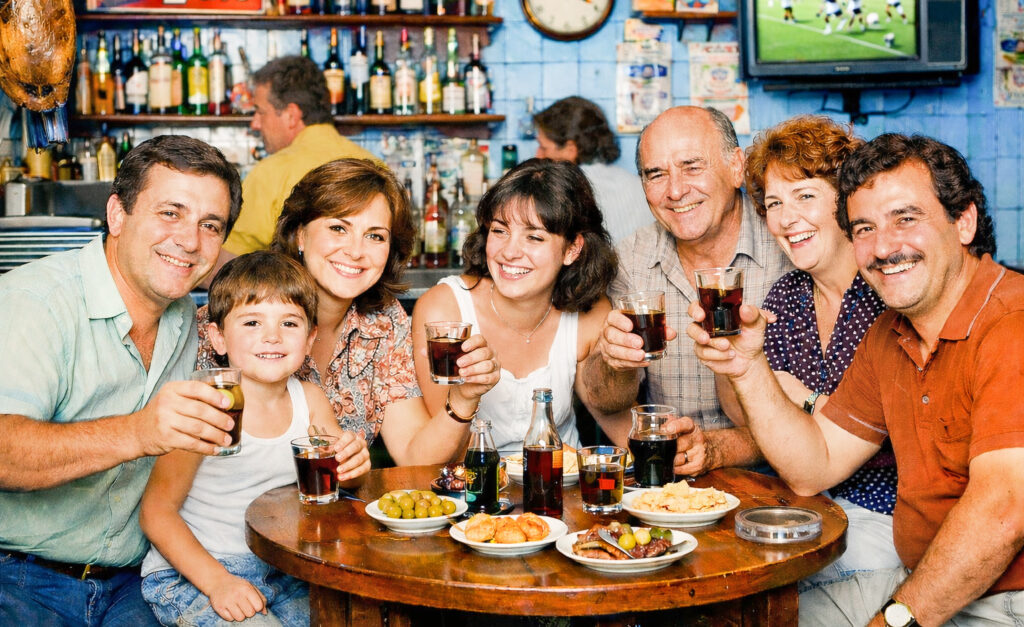
Mientras tanto, los mayores se quedaban en la barra o en las mesas altas del bar, con su vaso de vermut bien frío, con hielo, una rodaja de naranja y, si el camarero se venía arriba, hasta una aceituna pinchada. Se hablaba de todo y de nada: del partido del domingo, del vecino, de cómo iba el pueblo o de lo bien que se estaba allí sin ninguna prisa por irse.
En la mesa nunca faltaban los clásicos: altramuces, calamares, jamón, queso, alguna gilda o unas bravas para compartir. Los camareros iban y venían con la bandeja, el bar estaba lleno, en la calle ya empezaba a apretar el sol y el domingo tenía ese ambiente tan nuestro: tranquilo, ruidoso y feliz al mismo tiempo.
Porque la hora del vermut nunca fue solo tomar algo antes de comer. Era el plan del domingo. El punto de encuentro. El rato de risas, de charla y de calle. Un pequeño ritual que empezaba con “vamos a tomar uno rápido” y acababa casi siempre con “venga, el último y nos vamos”.
Y es que hay tradiciones que no se explican, se heredan. Se aprenden viendo a nuestros padres brindar en la barra, escuchando sus historias y creciendo alrededor de esa mesa de domingo. Sin darnos cuenta, entre mostos, chuches y vermuts bien servidos, fuimos haciendo nuestra esa costumbre tan nuestra.
Porque en la terreta la hora del vermut no solo se cuenta… se pasa de padres a hijos. Y así, domingo tras domingo, la tradición sigue viva.
Many of us have known the word vermouth since we were very little, because when Sunday mornings came around we would put on our best clothes — our ropa de mudar, as they say in la terreta — and head out with the family to have a vermouth. Vermouth time usually came after the twelve o’clock mass in many households… although for many people the important thing wasn’t the mass — it was the perfect excuse to go out and spend time with family or friends.
For us, they would order a glass of grape must and a gilda or some other tapa, and we would spend the whole morning running around the street with our cousins or with friends we had just met there, right outside the bar or along the tapas street. Back then it didn’t matter who you were: within five minutes you were already playing together as if you had known each other forever.
Since we were little, we’ve always associated vermouth time with one of the most fun moments of the weekend. It was also during that outing when the sacred pocket money for sweets would appear: tico-tico, gusanitos, morenitos, Chupa Chups, Peta Zetas… and at least one bag that mysteriously disappeared before we even got home. And that was despite our parents warning us that if we ate too many sweets we wouldn’t have room for lunch… but who could possibly resist?
Meanwhile, the grown-ups stayed at the bar or around the high tables with their glass of vermouth served nice and cold, with ice, a slice of orange and, if the waiter was feeling generous, even an olive on a stick. People talked about everything and nothing: Sunday’s football match, the neighbour, how things were going in town, or simply how good it felt to be there with no rush to leave.
On the table the classics were always there: lupin beans, calamari, ham, cheese, a gilda, or some patatas bravas to share. Waiters moved back and forth with their trays, the bar was full, the sun was starting to warm the street, and Sunday had that atmosphere so typical of us — relaxed, lively and happy all at the same time.
Because vermouth time was never just about having a drink before lunch. It was the Sunday plan. The meeting point. The moment for laughter, conversation and street life. A small ritual that always started with “let’s just have a quick one” and almost always ended with “come on, one last one and then we go”.
Some traditions don’t need explaining — they’re inherited. We learn them by watching our parents raise a glass at the bar, by listening to their stories, and by growing up around that Sunday table. Without even realising it, between grape must, sweets and well-served vermouths, that tradition slowly became ours too.
Because in la terreta, vermouth time isn’t just something you talk about… it’s something passed down from parents to children. And so, Sunday after Sunday, the tradition lives on.